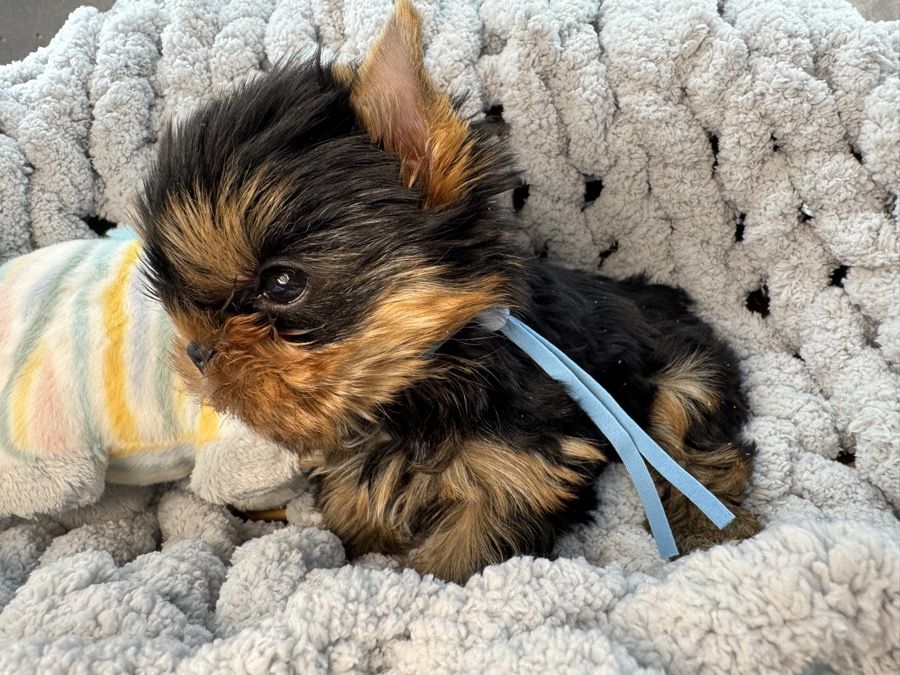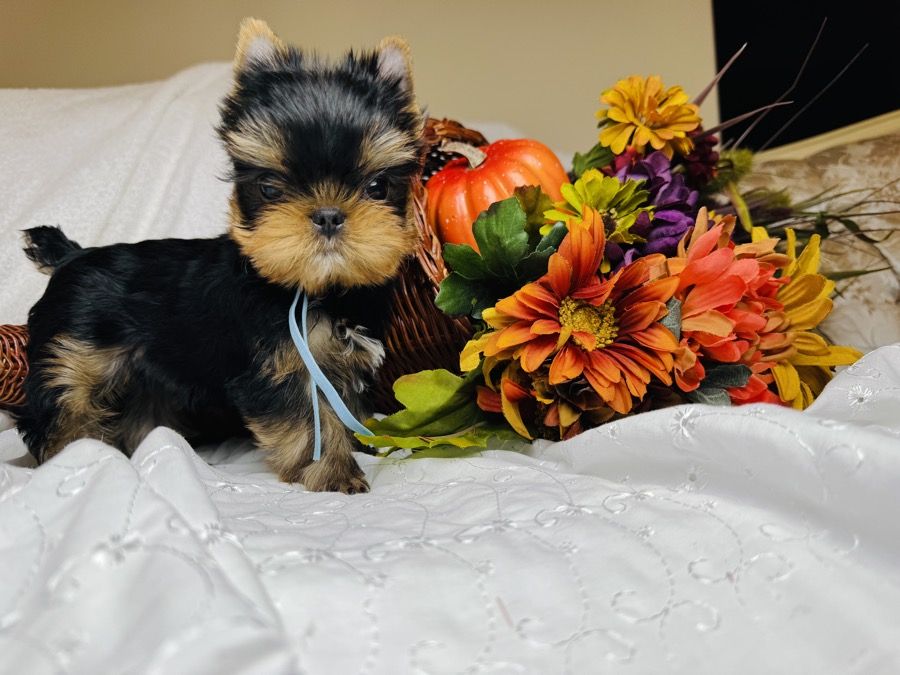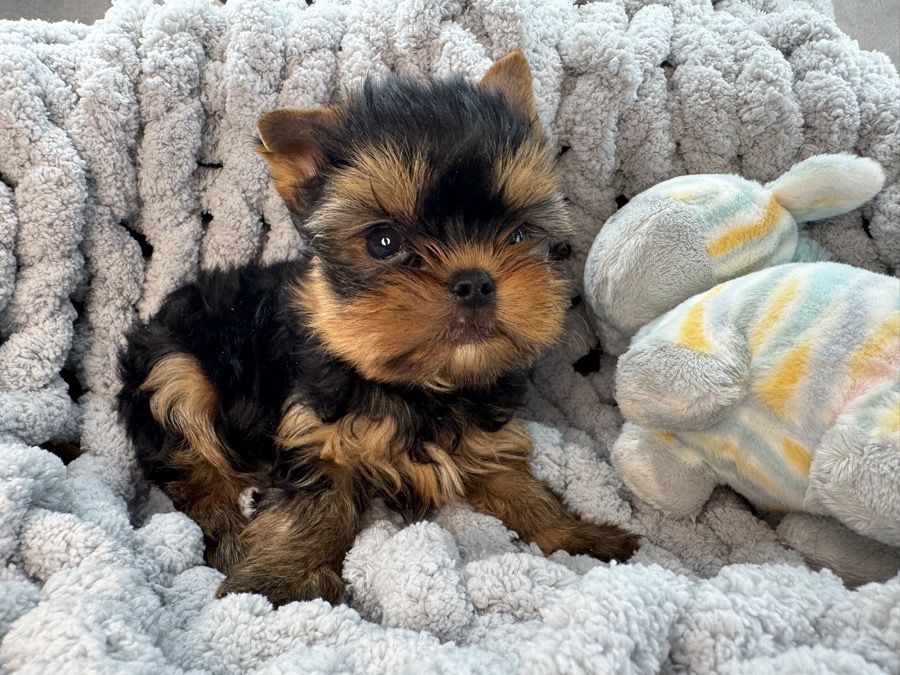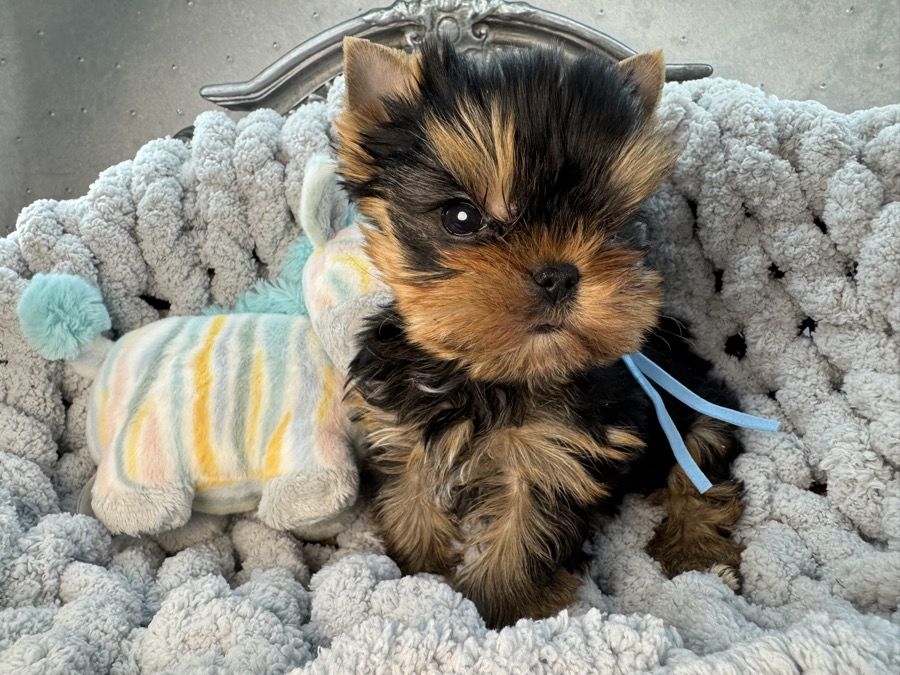
Yorkies are smart, but they are small, and small bladders mean frequent trips. Many families tell me potty training is the part they worry about most. I'm Dianna, a Michigan breeder, and here is the approach I recommend. Every puppy learns at their own pace, so please be patient and consistent.
Why it takes time
A tiny puppy cannot hold it for long. Young puppies need to go after eating, drinking, sleeping and playing, and sometimes in between. Expect accidents, and never punish them. Your puppy is learning.
Set up your space
- Choose one spot for potty, either pee pads or outside, and keep it consistent.
- Use a crate or playpen when you cannot watch your puppy. Dogs do not like to soil where they sleep.
- Keep a leash or harness handy by the door.
- Clean accidents with an enzyme cleaner so the smell does not call your puppy back.
The routine
1. Take your puppy out first thing in the morning.
2. Go out after every meal. Most puppies need to go within a short time after eating.
3. Go out after naps and play.
4. Go out before bed, and again if your puppy wakes in the night at first.
5. Reward right away. A tiny treat and happy words within seconds of finishing teaches the lesson.
6. Use a cue word. Say "go potty" as your puppy goes and the words become a signal.
Pee pads or outside?
Many Yorkie owners use both. Pee pads are a convenient backup for apartments, bad weather and young puppies. Starting with pads indoors and then moving the pad toward the door and outside is a common approach. Your puppy will go home with some pee pads in the puppy kit.
Watch for signs
Sniffing, circling, whining or suddenly stopping play usually mean your puppy has to go. Move quickly to the right spot.
Mistakes to avoid
- Punishing accidents. This teaches your puppy to hide.
- Giving too much freedom too soon. Expand the space slowly.
- Skipping the schedule on busy days.
- Waiting for your puppy to ask. Puppies usually do not ask until they are older.
- Forgetting small dogs get cold. Keep outdoor trips short in cold weather and use a coat if needed.
How long it takes
Many puppies make good progress in weeks, and full reliability can take months. If you hit a plateau, go back a step and shorten the time between trips.
Crate training helps
A cozy crate is a big help for potty training. Make the crate a happy place with a blanket and a toy, and feed meals nearby. The supply checklist covers what to buy.
Training and puppy school
Every Sweet Bella puppy comes with a discount to Baxter and Bella puppy school, an online program that supports training. Read about everything that comes with your puppy.
Ask me anything
I offer lifetime advice. Call or text (989) 820-9303, or apply for a puppy to start your journey.
Common questions about potty training
How long until my puppy is reliable?
Many puppies make real progress within weeks, but full reliability can take months. Small dogs need frequent trips, and some do better with pads for a long time.
Is it okay to use pee pads forever?
Yes, many Yorkie owners use pads long term, especially in apartments or cold weather. Choose a method you can keep up consistently.
My puppy goes right after we come inside. What now?
Stay out a little longer, keep the trip boring and wait for the potty before play. Reward right away once your puppy goes.
How often should a young puppy go out?
After meals, naps and play, and every couple of hours at first. Ask your vet for guidance about your puppy's age.
What if my puppy has accidents at night?
Take your puppy out right before bed, keep the crate small and cozy and expect a middle-of-the-night trip at first.
What cleaner should I use?
Use an enzyme cleaner made for pet accidents so the smell does not draw your puppy back.
Should I punish accidents?
Never. Stay calm, clean up and take your puppy to the right spot. Punishment can make a puppy hide, which makes training harder. See the checklist for what to buy.
Celebrate small wins
Every successful trip is progress. Keep a simple chart on the fridge and put a tick each time your puppy goes in the right place. It helps everyone in the family stay consistent, and it reminds you how far you have come when a bad day happens.
Be patient with yourself too
Potty training is a skill for you as much as for your puppy. You are learning to read signals, keep a schedule and respond fast. Both of you will get better, and before long it will feel natural.
Ready to meet your puppy?
See the available puppies, or call Dianna at (989) 820-9303 with your questions.
See the puppiesApply for a puppy